A Roaring Fork Leadership Civic Impact Project
What if the challenge facing our communities isn’t a lack of good organizations? What if the challenge is that we struggle to see how those organizations, systems, resources, and people connect?
That question became the foundation of Beyond Silos, a Civic Impact Project completed through Roaring Fork Leadership’s Academy program.
Originally proposed by Roaring Fork Leadership and the Glenwood Springs Chamber Resort Association, Beyond Silos began with a simple observation: while hundreds of nonprofit organizations serve communities from Aspen to Parachute, there was no shared understanding of how those organizations fit together, where collaboration already existed, where duplication occurred, and where opportunities remained untapped.
The project was never intended to create another directory. It was intended to explore something deeper: How do communities make more or better progress on challenges that no single organization can solve alone?
The Challenge Behind the Challenge
At first glance, nonprofit collaboration appears to be a technical problem.
- Create a directory.
- Hold more meetings.
- Share more information.
- Build a website.
But as Academy participants began interviewing nonprofit leaders and exploring the regional landscape, a different picture emerged.
- The barriers were not primarily technical.
- They were adaptive.
- Questions of trust.
- Competition for funding.
- Organizational identity.
- Capacity limitations.
- Communication breakdowns.
- Different definitions of success.
The project team quickly realized that improving collaboration would require more than better information. It would require helping leaders see themselves as part of a larger ecosystem.
Two Teams. One Shared Goal.
The importance of the challenge was reflected in an unusual outcome. Two Academy teams independently selected Beyond Silos as their Civic Impact Project. Each approached the challenge from a different perspective.
Team One: Seeing the Ecosystem
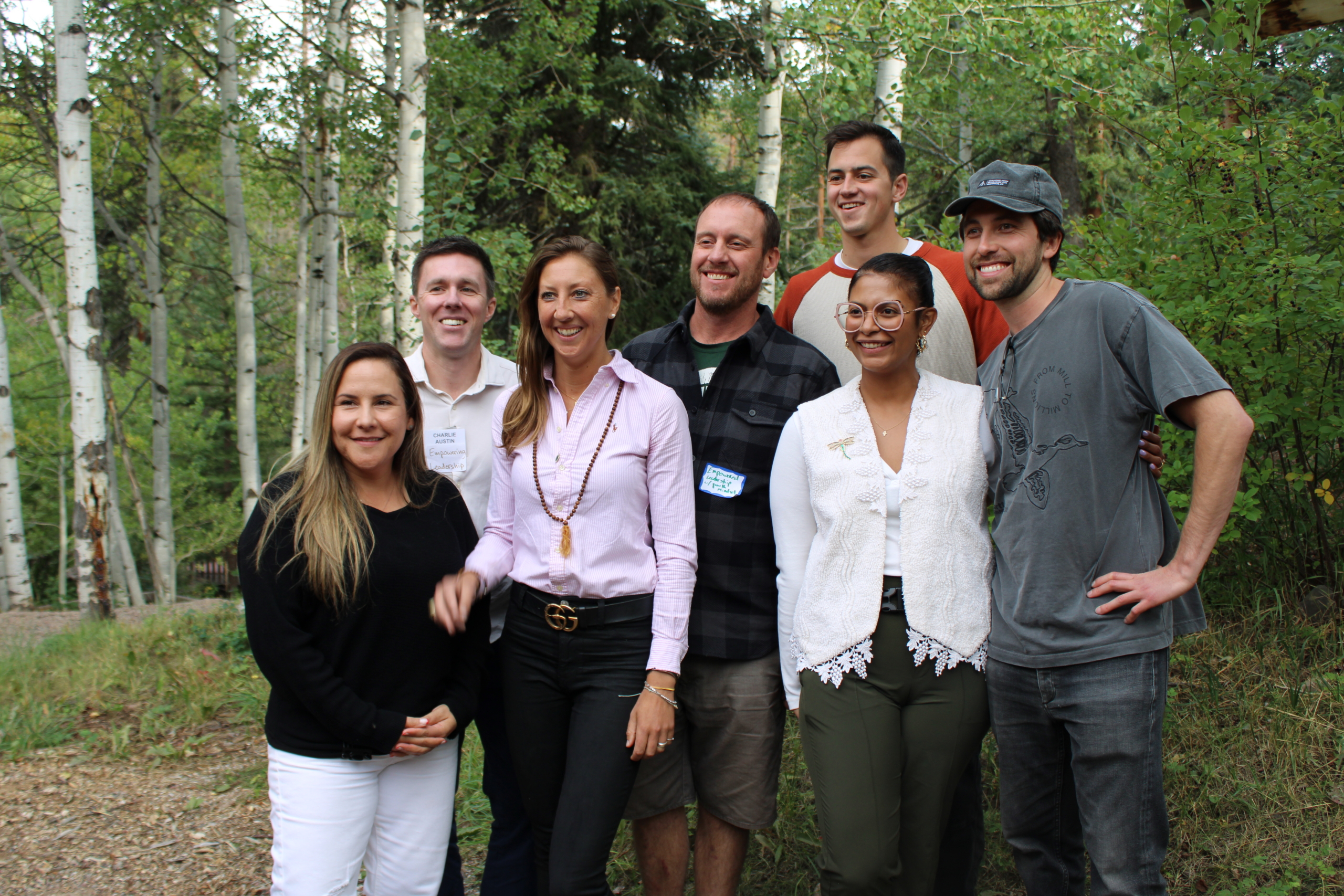 The first team focused on understanding the broader nonprofit landscape.
Through research, stakeholder interviews, and data collection, the team developed an interactive nonprofit ecosystem map using Power BI that will be available to the community in the next couple months. To see the team’s presentation and the ecosystem map – check out this video.
The map allows leaders to visualize organizations, sectors, services, relationships, and areas of overlap across the Parachute to Aspen region.
What began as a mapping exercise evolved into something much more powerful.
The map starts to help answer questions such as:
• Who is working on similar challenges?
• Where are service gaps?
• Where might organizations unintentionally duplicate efforts?
• Which sectors appear disconnected?
• Where are opportunities for stronger collaboration?
Most importantly, it helps leaders move beyond seeing only their organization and begin seeing the larger system.
Team Two: Strengthening Food Security Through Collaboration
 The second team chose to focus deeply on one sector: food insecurity.
Rather than attempting to solve food insecurity itself, the team explored how organizations working within the sector could collaborate more effectively. What they learned was – they already are – but also found opportunities for new approaches, new relationships, and new opportunities that hadn’t been uncovered.
The result was a practical collaboration framework and field guide designed to help organizations move beyond networking toward coordination, cooperation, and collective action.
The framework provides tools for stakeholder mapping, collaboration assessment, trust-building, ecosystem awareness, shared purpose development, and collaborative action planning. Resource: RFL Beyond Silos Nonprofit Collaboration Framework June26
The team recognized that stronger collaboration is not created by good intentions alone. It requires structure, relationships, shared understanding, and ongoing stewardship.
Learning to See Systems
 One of the most important lessons from Beyond Silos is that communities function as interconnected systems.
- Food insecurity connects to transportation.
- Transportation connects to housing.
- Housing connects to workforce development.
- Workforce development connects to child care.
- Child care connects to economic stability.
- Economic stability connects to health and well-being.
- No challenge exists in isolation.
The same insight is now emerging through broader regional efforts such as Aspen Community Foundation’s Regional Confluences initiative, which seeks to understand the interconnected factors influencing well-being across the region, as they work with Colorado State University to gather and analyze data.
Beyond Silos became an early example of what happens when leaders begin viewing challenges through a systems lens.
From Project to Community Conversation
The project did not end with a final presentation. Its ideas continued through community conversations and nonprofit workshops.
In June 2026, Roaring Fork Leadership convened nonprofit and community leaders for the workshop “When There’s No Playbook.” Participants explored adaptive leadership, systems thinking, collaboration, and ecosystem awareness.
Many reported discovering new partnership opportunities, developing stronger connections with peers, and gaining a clearer understanding of the difference between technical problems and adaptive challenges.
The conversation shifted from “How do we fix this?” to “How do we work together differently?” That shift may be one of the most important outcomes of all.
Resource: Beyond_Silos_RFL_Flyer
Why This Matters
- Communities are increasingly being asked to solve complex challenges with limited resources.
- Funding is constrained.
- Staff capacity is stretched.
- Community needs continue to grow.
- No single organization can solve these challenges alone.
- Yet every day, leaders across our region demonstrate a willingness to collaborate, learn, and innovate.
Beyond Silos reminds us that progress often begins with a simple but transformative act:
- Seeing the system.
- When leaders understand how organizations, communities, and sectors connect, new possibilities emerge.
- Partnerships strengthen.
- Resources stretch further.
- Duplication decreases.
- Trust grows.
- Communities become more resilient.
Leadership in Action
Roaring Fork Leadership exists to develop leaders capable of navigating complexity and creating positive change. The Civic Impact Project, Beyond Silos, demonstrates what that looks like in practice. The project produced valuable tools, frameworks, and insights.
But perhaps its most significant outcome was developing leaders who can help communities make progress on challenges that have no easy answers. Because leadership is not simply about solving problems.
It is about helping people see the whole system, navigate uncertainty, and work together toward a better future. And that is exactly what Beyond Silos set in motion.
RFL Civic Impact Project Opportunity
Every year, Roaring Fork Leadership Academy participants partner with local organizations, nonprofits, public agencies, and community leaders to tackle real-world challenges through Civic Impact Projects. These projects provide an opportunity for organizations to gain fresh perspectives, research, stakeholder engagement, and actionable recommendations while helping emerging leaders apply adaptive leadership skills to meaningful community issues.
Past projects have explored topics ranging from nonprofit collaboration and food insecurity to workforce development, community engagement, organizational strategy, and regional challenges that no single organization can solve alone.
Civic Impact Projects are most successful when they address complex issues that benefit from diverse perspectives, systems thinking, stakeholder engagement, and collaborative problem-solving.
If your organization is facing an adaptive challenge, exploring a new opportunity, seeking community input, or looking to advance an important initiative, we invite you to consider submitting a Civic Impact Project proposal.
Potential project sponsors include:
- Nonprofit organizations
- Government agencies and municipalities
- Educational institutions
- Business and industry groups
- Community coalitions
- Philanthropic organizations
Together, we can create meaningful learning experiences for leaders while making tangible progress on issues that matter to our communities.
Interested in learning more?
Contact Roaring Fork Leadership at info@rfleadership.org or visit rfleadership.org to explore future Civic Impact Project opportunities.
Resource: RFL27 Civic Impact Project Playbook